
Let’s start
Indonesia was one of the first countries we visited on our backpacking trip, and maybe that’s why it holds such a special place in our hearts. It’s an incredibly diverse country, with a unique culture and breathtaking landscapes.
Before going, we had some concerns—especially about Bali. I had heard how tourism had taken a toll on the island over the years. And while that’s undeniably true, the magic of Bali is still very much alive. If you’re willing to step off the beaten path, like we did, you’ll discover untouched places, where the island’s true and wonderful essence remains intact.
Before you go
- Vaccines: No special vaccinations are required—just the standard ones.
- Visa: When we went, a 30-day visa cost around €30. The rules seem to have changed since then (the official site now lists a 60-day tourist e-visa), so check the current official details here before you go.
- Bali Tourist Tax: In recent years, there’s a €10 entry tax for Bali. It seems that no one checks it, but in my opinion, it’s a small and fair contribution considering the impact of mass tourism. You can pay for it here.
- Dengue: Dengue fever is a real risk and the consequences can be really bothersome, so always carry a reliable insect repellent.
- Bali Belly: The infamous “Bali belly” is often exaggerated. Just be cautious—always drink bottled water and stick to well-cooked local food. If you do, you shouldn’t have any issues.
- Rainy season: Despite being there during the weeks that correspond to the start of the rainy season (end of September), we only had one day of heavy rain in 3 weeks. There were some very short (some minutes long) showers in the other 3 or 4 days. We were probably very lucky, but in any case, the weather is super unpredictable and varies drastically in a matter of minutes, so always take a rain jacket with you (even if it’s extremely sunny when you leave your room).
TL;DR
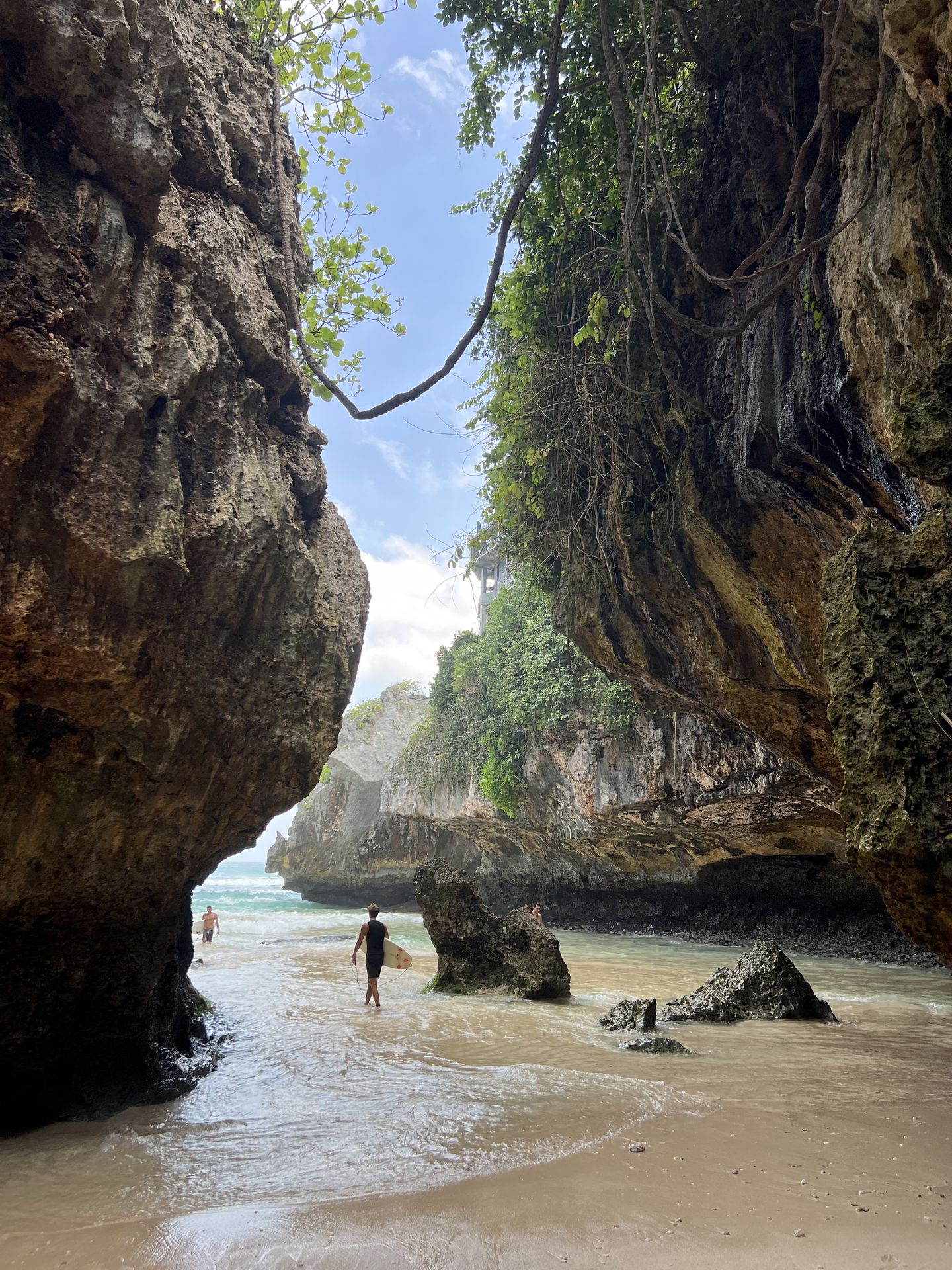
- The variety of activities and experiences is crazy: you can swim with sharks, hike a volcano at 2 AM, sleep for 4 days on the deck of a boat, and see pseudo-dragons on remote islands.
- Try to bargain for everything that is not food, since they will typically shoot prices up – in markets, when hiring tours and excursions, or when buying clothes.
- Eat only at warungs unless you are dying for Western food. The food is delicious, and although it can get a bit monotonous, the prices are so ridiculously cheap (between 1€ and 2€ for a normal dish) that you can’t complain.
- Local people are some of the most friendly you’ll meet in your life, particularly in Bali.
- Forget about living the full experience if you don’t rent a scooter—it’s vital.
- Avoid massively touristic places, since they get really packed and tend to be pricey. Our best experiences were typically in unexplored small villages.
- Be ready for really warm and humid weather. Try to rest during the hottest hours (around noon), or to be on the road with the scooter to get some fresh air.
Efficiency tips
Transportation from the airport
Uber doesn’t exist, you have to use Grab or Gojek (even cheaper).
Be aware that in remote places in the north of Bali and Lombok, these apps don’t work. You have to hire local drivers and bargain the price.
Money
Almost everywhere you will need to pay in cash. Avoid exchanging cash in your currency (USD, EUR, or whatever). Instead, use your Wise or Revolut card in ATMs to have the best exchange rate.
ATMs with no withdrawal fee: Mandiri, BNI.
SIM card
The only company that is not a tourist trap is Telkomsel. Don’t buy a SIM card at the airport. Go to a shop in a big city and take the local package, it works perfectly (6€ for one month).
Clothes
The weather is really humid, so it’s good to have fresh clothes that dry fast. Always have in your daily backpack a pair of long trousers for the temples.
Regarding laundry, it’s full of places around every island. Just do a quick search on Google Maps. Prices could vary from 1 to 2€ per kilo.
Scooter
I highly recommend renting one to explore the island (you can do it directly in every guest house, around 4-6€ per day). It’s the best way to discover small, off-the-beaten-path villages that are often overlooked by typical travel routes.
If you pop a tire, fixing it shouldn’t cost more than 1€.
Always get gas at gas stations (unless it’s urgent), because buying gas from street vendors is more expensive.
Authentic experiences
- Surf in Uluwatu or Kuta Lombok
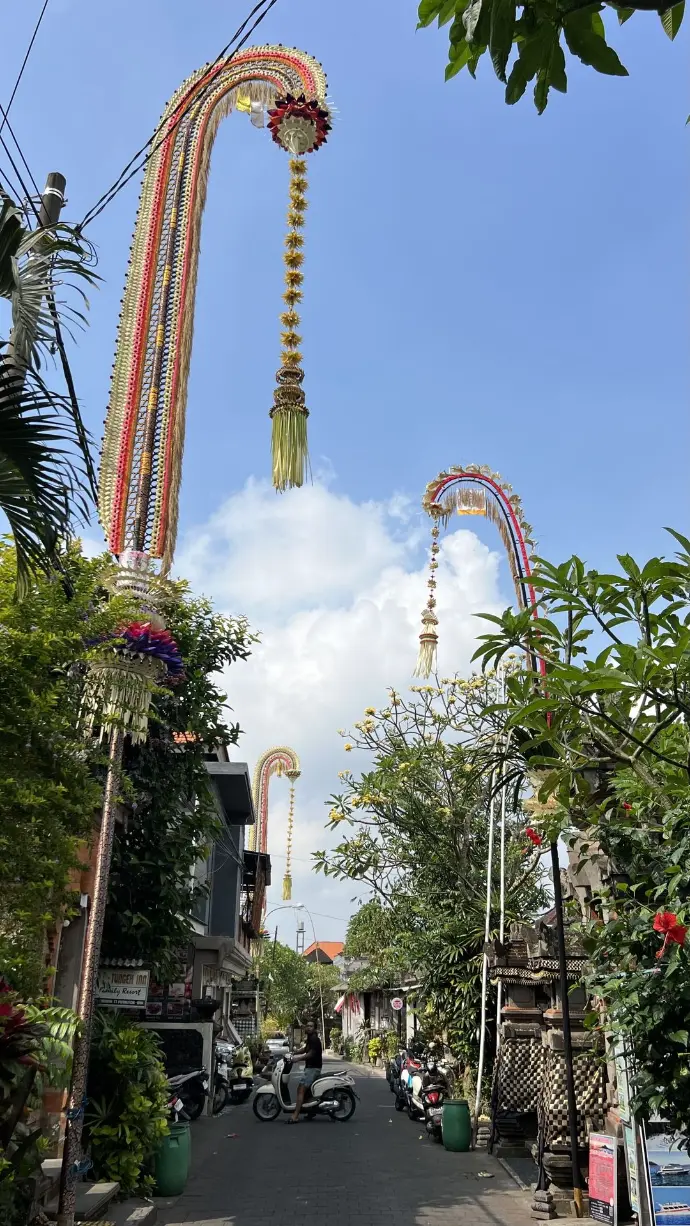
- If you can, go to Bali during Galungan, the biggest religious festivity that shows the true essence of the island
- Go to a Balinese temple and try to have a real ritual of purification
- Do yoga in Ubud
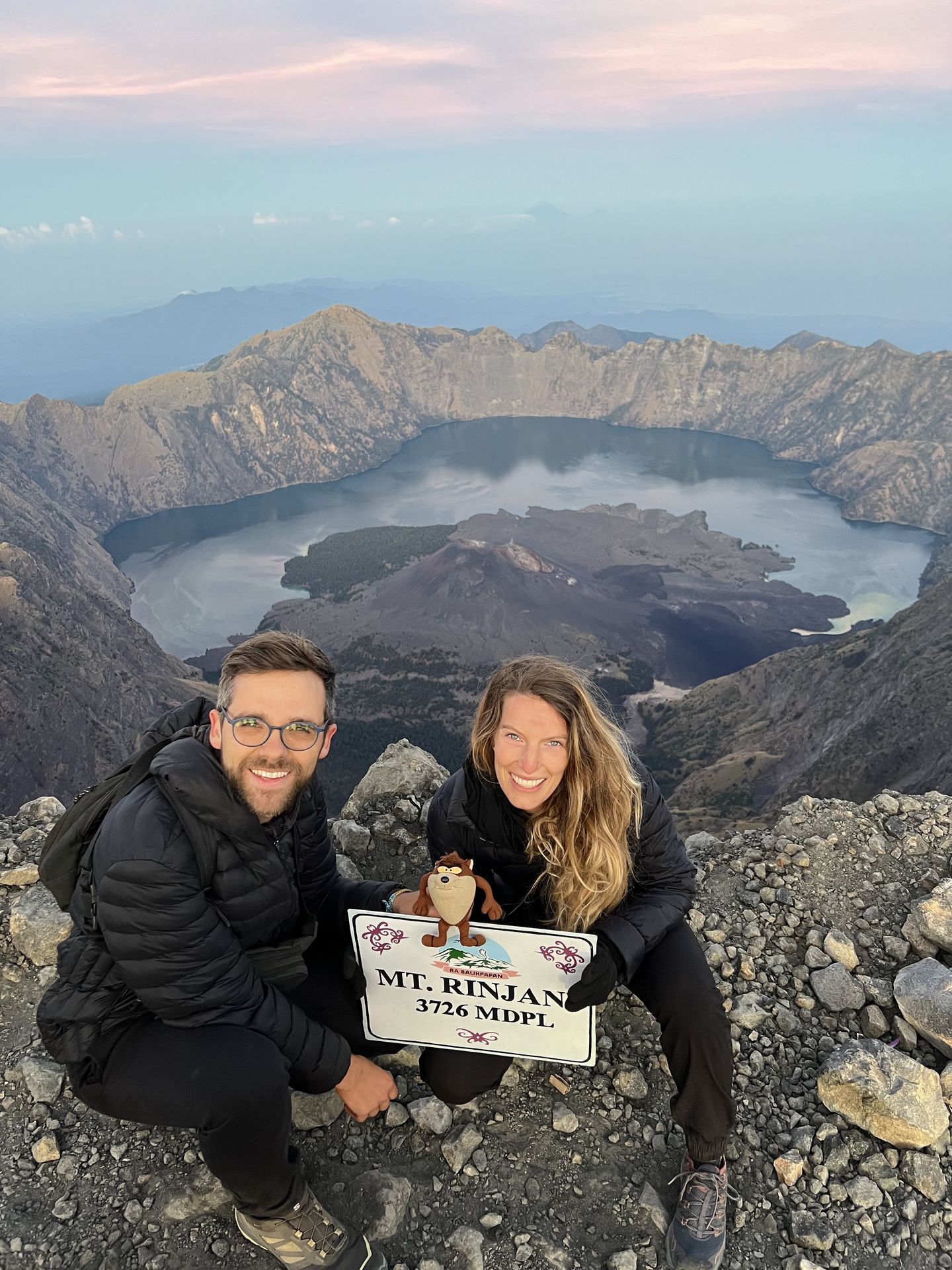
- Hike a volcano (Bromo, Ijen, Batur, or Rinjani - check the difficulty)
- Horseback riding on the beach in Gili Air
- Craft a personal silver ring in Sidemen
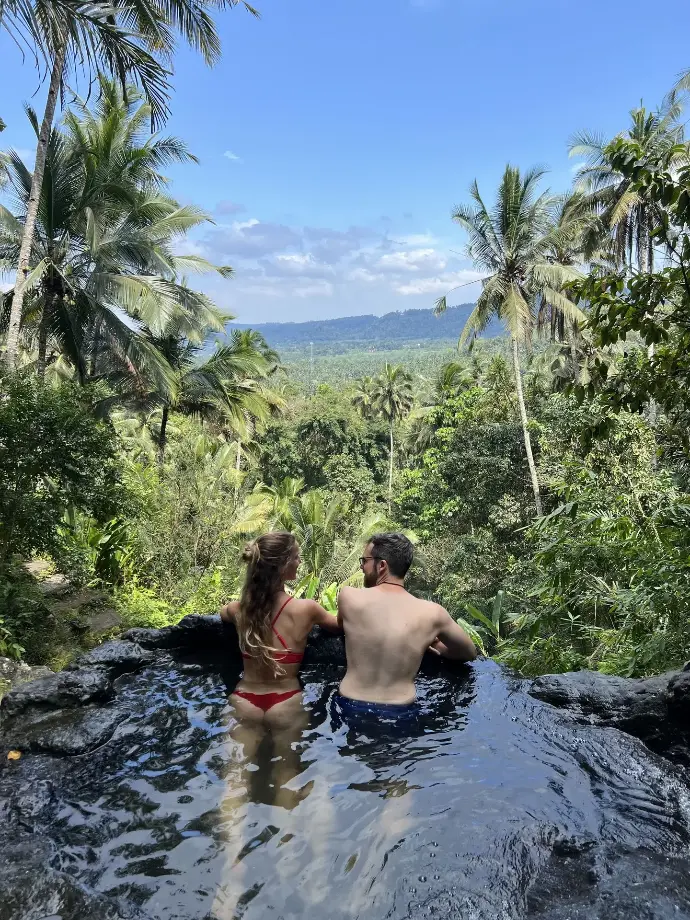
- Refresh in one of the thousands of waterfalls around Bali: Uman Anyar, Manuaba, Tukad Cepung (Ubud area), Gembleng (Sidemen), Sekumpul, Munduk (north Bali)
Itinerary
Indonesia is huge, and you’d need months to see it all. Here, you’ll find an itinerary covering the main islands we explored in three weeks!
Things we skipped
We chose to skip Java, as we weren’t particularly drawn to its big cities and preferred to focus on nature, adventure, and sports. While Mount Bromo and Ijen look incredible, we heard that mass tourism has taken over, so we decided they weren’t worth the visit.
For the same reason, we also skipped Canggu, Kuta, and Seminyak in Bali.
We didn’t have time, but you could fit a one- or two-day trip to Nusa Penida or Nusa Lembongan into this itinerary. The first has incredible landscapes but is very touristy, while the second is perfect for diving.
- 3 days Ubud
- 1 day Sidemen
- 2 days Amed
- 3 days Gili Air
- 2 days Rinjani Volcano
- 1 day Mataram
- 2 days Kuta Lombok
- 4 days boat tour (whale sharks, Komodo Island, Pink Beach, Padar Island)
- 1 day Labuan Bajo
- 3 days Uluwatu
1. Ubud: The True Essence of Bali
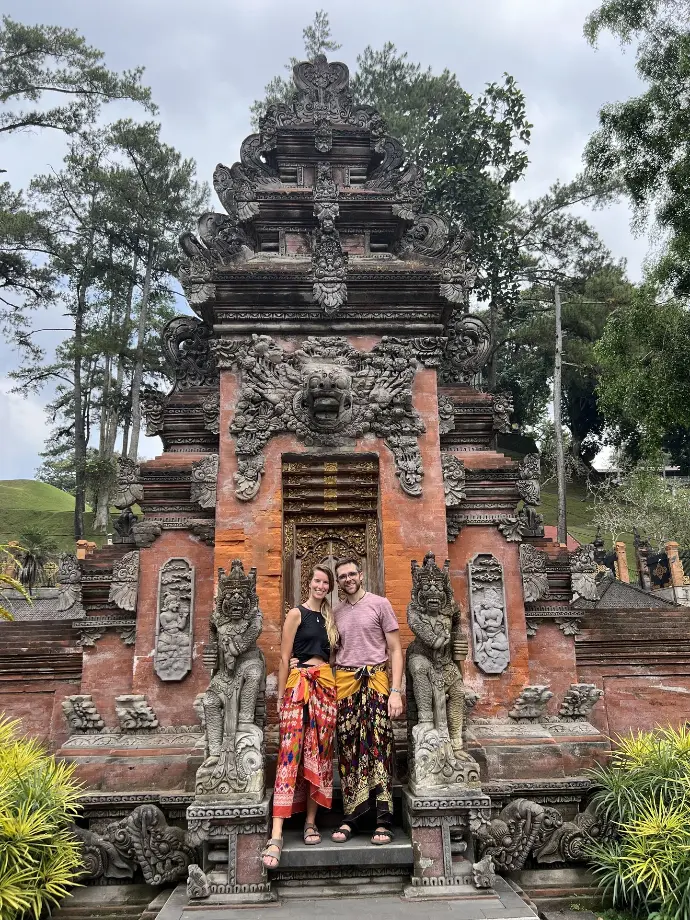
Ubud is the heart and soul of Bali. We loved staying in a guesthouse outside the city, completely immersed in the island’s lush nature, surrounded by small houses and temples that can only be found here.
Day 1
Monkey Forest – Despite being a tourist hotspot, we really enjoyed it and think it’s worth visiting. (Entrance: €4)
Ubud Palace (Free Entry) & Market – The market is right in front of the palace. Bargain hard! Aim to negotiate down to about one-third of the initial price.
Tukad Cepung Waterfall – A stunning spot, though quite far by scooter. The north of the island is full of incredible waterfalls. If you visit a well-known one, go early in the morning to avoid crowds—or better yet, ask the locals about lesser-known spots.
Day 2
Tegallalang Rice Terraces – Though very touristy, they were absolutely EPIC. It’s essential to go early in the morning to truly enjoy the experience. (Entrance: €2)
There is also the option to go to less touristic ones, like Jatiluwih rice terraces.
Tirta Empul – In our opinion, this is a bit of a tourist trap. Either go at 8 AM sharp or prepare to be surrounded by tourists taking part in what often feels like a staged purification ritual scam.
Yoga & Meditation at Alchemy – An amazing place with a fantastic class, of course created for foreigners. (€10) Highly recommended!
Day 3
Ubud City – half a day is completely worth it to spend wandering through the non-touristy streets of Ubud and soaking in the local atmosphere.
Mengwi – The ride there by scooter is beautiful, and Taman Ayun Temple was our favorite! (Entrance: ~€2)
Tanah Lot – A stunning temple in the middle of the sea, a must-see. Best visited at sunset for an unforgettable view. (Entrance: €5)
2. Sidemen
This little village is tiny and can easily be explored in a day, but it’s totally worth it!
The area is famous for its silver, and a super fun experience to try for a unique souvenir is making your own engraved ring at Adi Silver (costs around €15-20 per ring).
Gembleng waterfalls – possibly the best we’ve seen! (entrance fee by donation). The surrounding nature and rice fields are also worth exploring by scooter.
3. Amed
Amed didn’t really impress us. The beach is just black pebbles, and the water is so-so. The main activities here are diving (PADI certification available) and massages. For diving, we recommend White Sands Amed—fantastic instructors! We did a single dive (13m) for around €80, while the PADI certification costs about €400—way cheaper than anywhere else in the world. That said, if I had to choose, I’d get certified in the Gili Islands, where the reef is much nicer.
4. Gili Air
Getting there: We took a local driver from Amed to Padang Bai (port) for €15 total, then hopped on the Eka Jaya boat (2h trip). Despite the bad reviews, the ride was super smooth—maybe we got lucky! It costs €30 per person, but apparently, Golden Queen is just as good and half the price.
Which Gili to choose? We picked Gili Air—a perfect middle ground, not too wild but still with things to do.
How long to stay? 3 days max! The islands are tiny, and unless you’re diving, there’s not much else going on. We weren’t so impressed.
What to do? Just classic chill beach life! Best sunsets? Southwest coast, where all the beach bars are. Want to see turtles? Head to Turtle Beach, rent a snorkel for €2, and go explore—no need for overpriced tours, you can totally do it on your own!
5. Lombok and Rinjani volcano
From Gili Air to Lombok: We took the local boat instead of the tourist one—only €1 instead of €20! The one in the morning leaves at 8 AM, but it only departs once there are at least 40 people. Luckily, we didn’t have to wait long, and it left right away.
Hiking Rinjani: You can only go with a guided tour, which takes care of everything—pick-up, hotel stay the night before, tents, food, all included. We did the 2-day, 1-night trek, and we highly recommend it! The 3-day, 2-night trek is tougher, plus sleeping two nights in a tent, covered in volcanic dust, is rough. And honestly, you don’t see anything extra that makes it worth the struggle.
Cost? Around €180 per person. You’ll find cheaper options (and you can negotiate), but keep in mind that lower prices usually mean a terrible hotel the night before.
Important! Leave a good tip for the porters—they carry 20-25 kg on their backs for ridiculously low pay, and their job is beyond tough.
Overall? An unforgettable experience! Probably the hardest trek we’ve ever done because of the elevation and sandy terrain, but 100% worth it. Just be ready to rough it a bit!
If you want our guide’s direct contact, DM us!
6. Mataram
Honestly, you can totally remove this city from your itinerary. It’s one of the biggest cities in Lombok and… not exactly pretty. The only reason to stop here is if you need big shops or a break on a long journey. We stopped because we wanted to scooter our way to Kuta instead of taking a taxi.
7. Kuta Lombok
On our road trip to Kuta, we stopped at Sade Village, a traditional village that feels a bit staged for tourists but still has some interesting stories. Watch out—they’ll try to make you pay for a tour, but we bargained it down to €5 for two, and it’s definitely not worth more than that.
Kuta Town – Super cute, with great cafes, cool shops, and a chill surfer vibe. Also, good nightlife.
Sunset Spot – We highly recommend Sunset View Hill, an incredible place with a breathtaking panoramic view. There are street vendors selling drinks, so you can enjoy a sunset aperitivo. One of the best spots in Indonesia.
Surfing – A Must! Whether you’re a pro or a beginner.
Best Beaches – Pantai Selong Belanak: great for surf beginners and full of surf schools (lessons around €15).
Mawi: beautiful but only for experienced surfers. It’s worth watching! Be careful—the road to arrive is rough, so you need good motorbike skills.
Tanjung Aan: A nice but more touristy beach. If you walk to the far end, you’ll find locals. We spent the whole day playing with a group of kids and their families—such a great experience.
8. Boat tour
Despite the many negative reviews online, for us, this was one of the best experiences in Indonesia. Of course, you need an adventurous mindset—if you’re looking for comfort, this isn’t for you.
We highly recommend Wanua Adventure, a well-organized and professional company. For around €200, everything is included: pick-up, food, activities, and sleeping arrangements. We chose the mattress on the deck, but you can upgrade to a private cabin with AC. Honestly, the deck is the better option—more of an adventure, and cabins are near the engine, making them noisier and hotter. Instead, the deck is super ventilated thanks to the air circulation.
Day 1 started with them picking us up in Mataram, doing the check-in near Bangsal, and then driving us to the port in East Lombok. Lunch was included, and it was huge! Then we had a 2-hour boat ride to a deserted island for a swim and sunset. The first night was open-sea navigation—if you get seasick, bring meds. I had a couple of rough hours.
Day 2 starts early with a 5:30 AM sunrise swim with whale sharks—absolutely unreal. Then comes 22 hours of sailing, with a few swim stops. Long day, but super chill and fun if you have a good group.
Day 3 kicks off with a Komodo Island tour to see the Komodo dragons, followed by a stop at Pink Beach for snorkeling and Padar Island for sunset—a short hike with an incredible view of three different-colored beaches.
Day 4 is more relaxed, with a stop at a tiny island to see baby sharks. The trip ends after lunch, around 2 PM. That night, the whole crew met up in Labuan Bajo for one last party together.
In summary, 4 unforgettable days!
9. Labuan Bajo
Honestly, there’s not much to do in this city—you can easily just stay one night as a stopover. The center has a bit of a Cancún vibe, with luxury hotels and tourist-oriented restaurants right next to really underprivileged areas.
In the area, you can do diving, boat trips, or visit caves and waterfalls. For anything you need—scooter rentals, taxis, tours—write us for a contact of a super trustworthy and wonderful guy.
10. Uluwatu
This area is known for its surf vibe, and it’s a must-see. It’s a bit unusual since there’s not an actual “town center”. Having a scooter is a must to go beach hopping.
Day 1
Suluban Beach – absolutely stunning, go early in the morning.
Padang Padang Beach – beautiful, with intermediate-level surfing.
Nunggalan Beach and Karang Boma Cliff for sunset.
Day 2
Shopping in town (on Sundays, there are some amazing markets). In the afternoon, I took a surf lesson at Kala Surf Camp (€25)—did it with a friend in a great spot, but you could probably find a cheaper option.
Food
You can find thousands of good-looking restaurants with amazing pizzas and burgers. You won’t find information about those spots here. However, if you want to go full low-cost and try authentic Indonesian food at family-owned places, then keep reading.
Indonesian cuisine has two main staples that you will find everywhere:
- Nasi Goreng (fried rice)
- Nasi Campur (mixed rice, which literally means “rice” with “whatever else the place that sells it decided to put next to it” – you can get peanuts, egg, tempe, chicken, tofu, cucumber, and many other things).
Other dishes that you must try while in Indonesia:
- Dadar Gulung (a really good and particular dessert).
- Tipat Cantok (our favorite Indonesian dish, you can probably only find it in Bali).
- Chicken Curry (not really from Indonesia, but they know how to do it well).
- Gado Gado.
- Pisang Goreng (fried bananas, a tasty but heavy dessert).
The best bet to have delicious food for ridiculously cheap prices is warungs. These are generally small family-owned shops. However, some places just call themselves “warungs” because, probably, they attract more tourists calling themselves like that. In any case, here is a list of warungs (and maybe some not-so-warungs) that really stood out because of the food, the friendliness of their staff, and the really good prices. (Note: the list is not in any particular order.)
- Sun Sun Warung (Ubud). Definitely not an actual warung, but the food there was SO good that it earned a spot in this list. The place is beautiful too since it’s quite touristy. Nasi Campur is really good here (45k IDR or 2.5€ for the one with chicken), and also Dadar Gulung was really good.
- Murni’s Warung (Ubud). In theory the oldest warung in the city – although not very warung-like looking, and with the menu fully in English, so quite touristy. However, here we had Tipat Cantok. A must-try, hands down life-changing dish. And here it cost only 35k IDR (2€).
- Warung Ole (Amed). Totally family-owned, this place may be a bit slow since there are only two people cooking, and the place gets quite packed. But there’s a reason for this: the food is amazing, the prices are incredible (almost every dish is 30k IDR or 1.70€), and there is a really large variety of dishes. You can even have burgers or pasta there if you want, although, of course, we encourage you to try the authentic Balinese options.
- Warung Makan Pak Dikin (Labuan Bajo). We found this place completely by chance when starving while going around. We stopped and found that here not only the Nasi Goreng was 15k IDR (0.85€, absurd), but also it was the best we had on our trip. The hygienic conditions of the place were not the best, but well… You can’t have it all!
- zZz Warung (Gili Air). Our favorite place in all of Indonesia. We went here like 5 times in 3 days. Almost every dish is 30k IDR (1.70€), and the food is OUTSTANDING. Shoutout to the chicken curry – one of the best we have had. Also, Gado Gado is a must-try! And you can wrap up your dinner with some nice Pisang Goreng.
- Mrs Widya’s Campur-Campur (Uluwatu). This place, as its name hints, only sells Nasi Campur. But it is, by far, the best one we had while in Indonesia. It’s quite different from all other places since you can customize your dish as you want: you choose what kind of rice you want, and you add things (the “campur” part) to it, just like you would make your sandwich at Subway. The cost varies since it depends on what you choose, but the price was really fair, and the options were limitless and all of them were delicious. The owner of the place was also super kind, and he remains one of our favorite locals that we met throughout our journey!