Let’s start
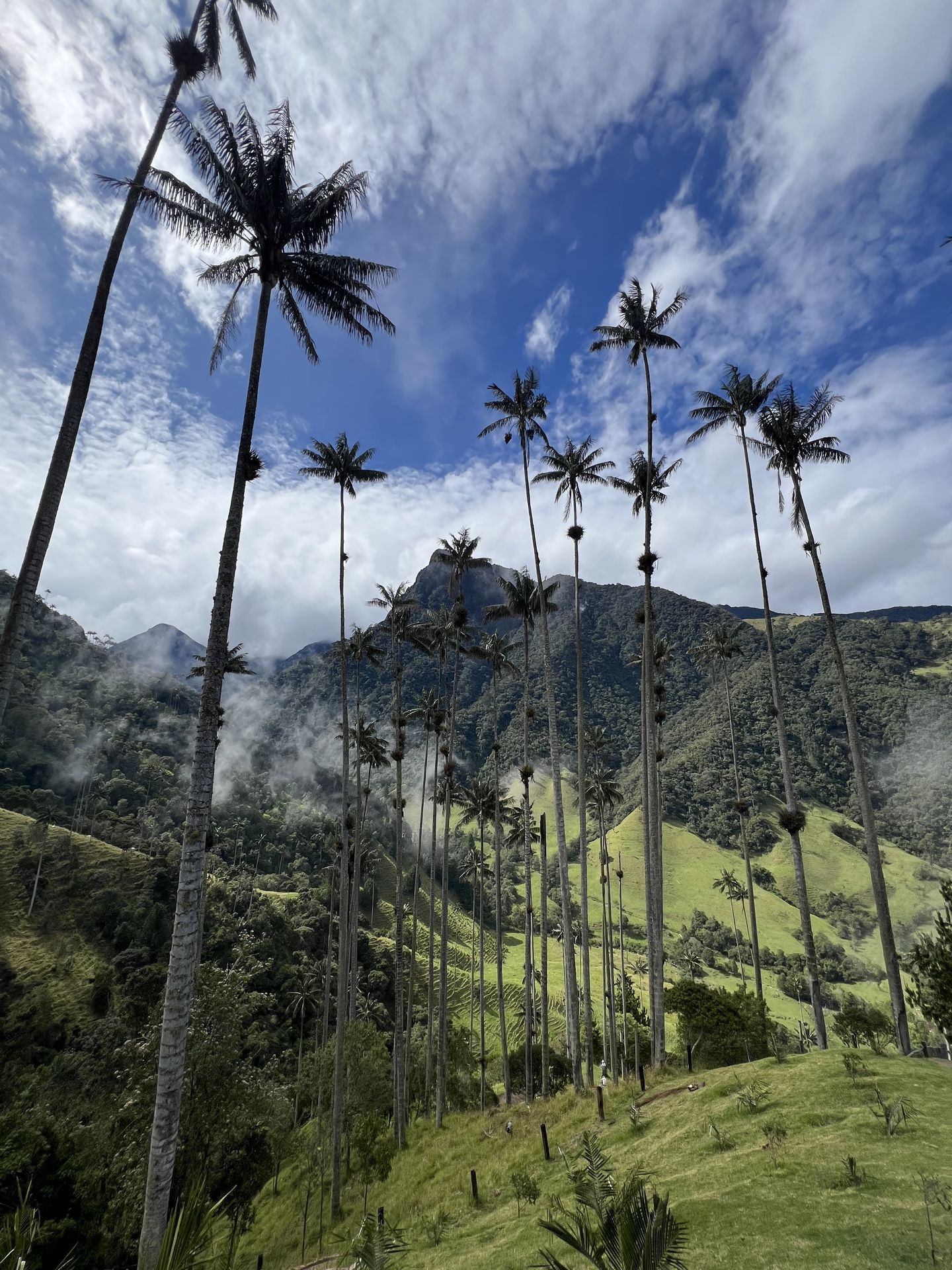
Colombia is a truly wonderful country, with incredible diversity. You’ll find a huge and beautiful city like Medellín, the 40-meter-tall palm trees of the Cocora Valley, charming little colonial towns, deserts, jungle, and Caribbean beaches.
Getting around is actually quite easy, so in just two weeks you can see a ton of different places. Thanks to super cheap domestic flights, we managed to visit the central area (Medellín, Salento, Pereira, Filandia) as well as the Caribbean coast (Cartagena, Santa Marta, Tayrona National Park).
Like in any good South American country, the vibes are unbeatable, and locals are always ready to help you with anything you need. If Colombia has been voted the most beautiful country in South America multiple times, there’s definitely a reason: it’s simply unmissable.
Before you go
- Vaccines: if you go to Tayrona National Park, it’s mandatory to have the vaccination against yellow fever. To enter the country, there are no mandatory vaccinations. Requirements can change, so always check the official websites for the latest information before you go.
- Visa: Italian citizens do not need a visa for tourism.
- When to visit: the weather is pretty much stable and almost the same all year round. We went in September and had some random rains that lasted a maximum of one hour, usually at night. It is worth mentioning that in August in Medellín there is the “Feria de las Flores”, which everyone says is a must.
Efficiency tips
Transportation from the airport to Medellín
Right outside the international exit, you can easily find buses that take you to the center for around 4 EUR. The only stop they do is San Diego Mall; from there it’s possible to take an Uber to every neighborhood of the city. Uber is extremely cheap in Medellín, so don’t hesitate to use it!
Where to sleep in Medellín
The main 3 areas where to sleep in Medellín are:
- El Poblado: if you like to party and you don’t mind that the area is basically an expensive tourist trap. We didn’t like the vibe at all, so we would suggest visiting the neighborhood one night that you want to go out, but not to sleep there.
- Laureles: lovely area, very residential and full of nice restaurants and cafes. There is also an avenue (Carrera 70) that has bars and discos if you want to go out at night. It’s really central and comfortable to move around during the day; it’s close to the metro.
- Envigado: lovely residential area, super quiet and local (there are almost no tourists). The bad side is that it’s quite outside the city, so it’s not very comfortable to move around.
How to move around the country
Internal flights are very cheap (around 70 EUR round-trip), and there are airports in all the main cities, so it’s very easy to move across the country fast. The connection with buses and night buses is also very good. We don’t suggest covering very long distances, though, because in some routes there is always a lot of traffic that can make the trip very long and make you lose a lot of time from your vacation.
Money
Always use your Wise or Revolut card for the best exchange, but be aware that many activities don’t accept cards.
Since we had USD, we always exchanged in local shops, checking every time for the best rate. All the ATMs have a fee that varies from 18k to 28k COP.
SIM card
The two main companies that provide internet are Tigo and Claro. Claro has a better reception, and if you want to spend a little bit more, you can get a SIM card at the airport for 15 EUR.
If you want to save as much as possible (as we did, of course), you can activate an 18 GB eSIM from Tigo’s website for 5 EUR. The only issue is that it’s possible to pay only with a Colombian card (we asked a receptionist of one of our stays to purchase it for us and we gave him the cash).
Clothes
If you go into the jungle, bring long clothes that protect you from insects (and use a lot of repellent!), that dry fast, and that are VERY, VERY light. The heat can get really tough.
TL;DR
- Colombia has incredible diversity packed into a small window: big cities, coffee-region palm trees, colonial towns, jungle, and Caribbean beaches. It’s genuinely one of the most beautiful countries we’ve been to.
- Cheap domestic flights make it easy to cover both the central coffee region and the Caribbean coast in just two weeks.
- Be sure to include Medellín (don’t miss the Comuna 13 walking tour), Tayrona and Salento (Cocora Valley hike is a must) in your trip. Cartagena is a bit overrated in our opinion.
- Watch out for scams around the Rosario Islands boat tickets: only buy from an official counter behind glass, never from a street reseller.
- The Tayrona National Park trek to Playa Brava is tough (humidity, not distance) but staying on that beach is one of the most magical experiences of the whole trip. We suggest starting from El Calabazo entrance!
- We skipped Bogotá on purpose, but it could be worth adding if you’re into museums and history.
Authentic experiences
- Take a guided tour in Comuna 13, a unique neighborhood with an incredible story.
- Visit an authentic coffee farm.
- Go to a salsa bar in Medellín’s Carrera 70.
- Hike through Tayrona National Park and sleep at a campsite on the beach.
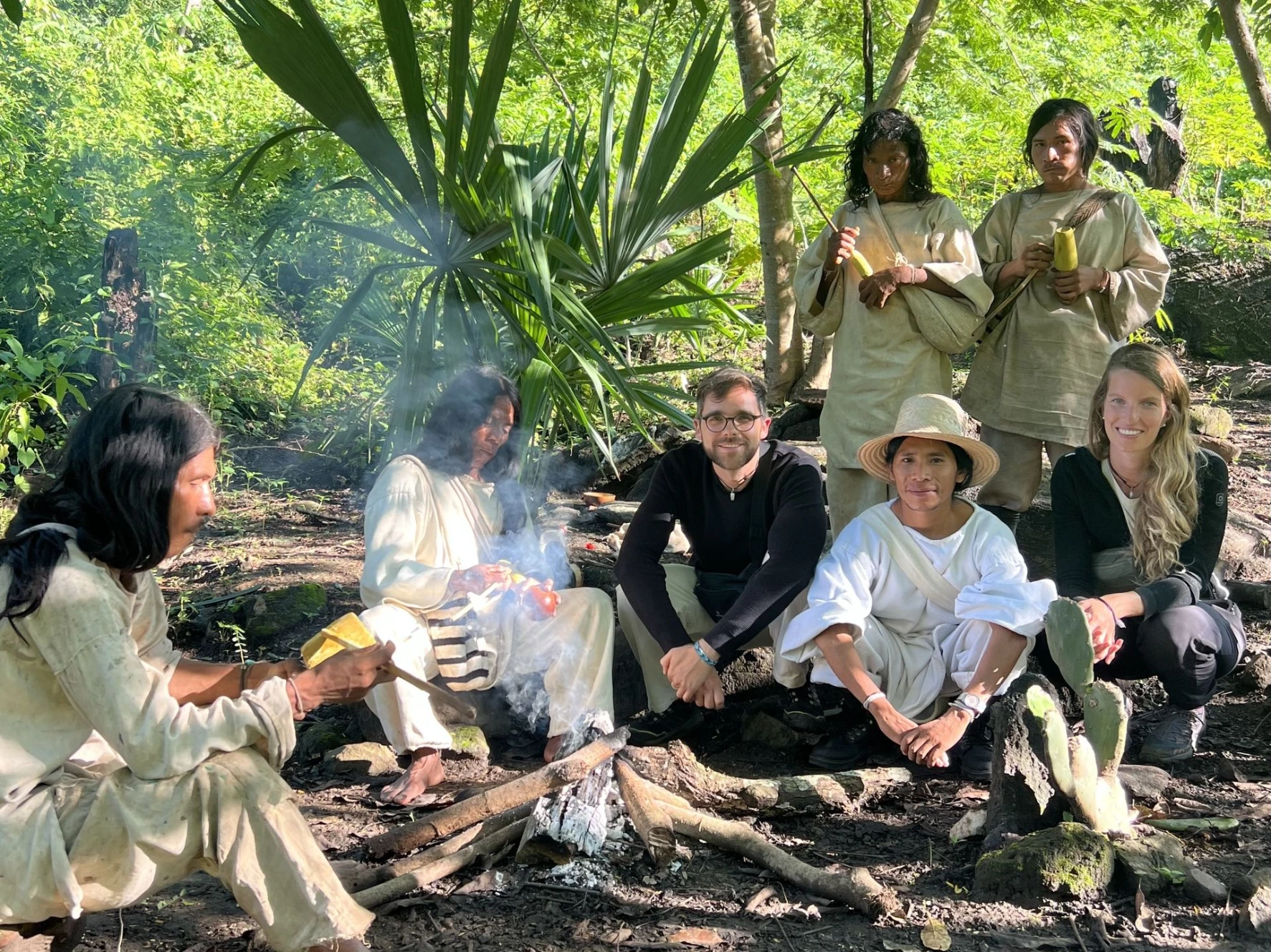
- Visit the Kogui indigenous tribe.
Itinerary
Colombia is a large country, but luckily domestic flights are very affordable, which makes it easy to travel around even in a short time.
In just two weeks we managed to see the main highlights, focusing on Medellín and its surroundings, the Caribbean coast, and a small volunteering experience.
We deliberately decided to skip the capital, Bogotá, as we had been told it’s not a great city for tourism. That said, if you’re interested in museums and history, it could make sense to include it.
Our itinerary was:
- 4 days in Medellín
- 2 days in Salento (Pereira, Cocora Valley and Filandia)
- 2 days in Cartagena (and Rosario Islands)
- 3 days in Santa Marta and Tayrona National Park
- 2 days of volunteering in Sierra Nevada
1. Medellín
Medellín is a very large city, full of interesting neighborhoods to explore. Contrary to what many people say, it isn’t dangerous as long as you stay within the tourist areas of the center.
Day 1
We joined a walking tour of Comuna 13 through GuruWalk. This is an absolute must! It lasts about three hours and is super interesting. No spoilers, but it’s probably one of Medellín’s most iconic spots.
Later we visited Pueblito Paisa, very touristy but still charming. For dinner we headed to Envigado, a more local, residential neighborhood that’s definitely worth seeing if you want to get a feel for real life in Medellín. We went there by metro, with the travel card having a cost of 11,000 COP (3 EUR), and then each trip cost 4,000 COP (1.10 EUR). We just bought one card since it can be shared, so no need to buy one per person.
At night we explored El Poblado, one of the most famous districts for nightlife. Personally, we didn’t love it… It might be worth a visit, but the American-style party vibe isn’t really our thing.
Day 2
We went to Guatapé, another very touristy but also iconic destination. There’s no need to book an organized tour. The more efficient and budget-friendly option is to take the bus from Terminal del Norte, at gate 9 or 14. They leave every hour and cost around 22,000 COP or 6 EUR. A useful tip: ask both ticket counters, because sometimes if they need to fill up seats, they’ll give you a lower price.
Once you arrive in the area, you can get off directly at La Piedra (a bit far from the town itself). From there, tuk-tuk cars can take you back and forth. Entrance to the rock costs 30,000 COP or 8 EUR, and it has a loooot of steps for a super nice view (totally doable if you are decently fit).
Afterwards, you can stroll through the town, which is very charming and colorful, “colonial style” and full of souvenir shops. Overall, we think a day trip is more than enough to see everything. For those who prefer a more relaxed trip, it’s worth staying overnight to enjoy some water sports on the lagoon around Guatapé.
Day 3
We headed to Plaza Botero during the morning. It’s quite unique and definitely a must-visit, but all the locals recommended that we avoid it at night since it can get sketchy. We then headed to wander around Placita de Flórez, a traditional market where you can find basically anything – from fresh flowers and souvenirs to meat and fish. We bought some fresh mango here that was hands down one of the best snacks of our trip!
In the evening we went to Mirador el Cielo, a very cool viewpoint some locals recommended to us. Definitely a good spot to see the sun go down. The view of the whole city at night is stunning from there. There are also some spots where to buy food, so you can even have dinner here.
To wrap up the day, we went for dinner in a restaurant in Laureles, by far our favorite neighborhood of the city. Then, we headed to Carrera 70, looking for a salsa bar. We found El Tíbiri, a somewhat hidden spot whose entrance is just a stair that goes underground. Incredible experience, for sure a must while visiting Medellín!
Day 4
We actually came back to Medellín at the end of our trip to catch our flight back home, so this day is actually after all the rest of the blog, but we write it here for simplicity. We only had half a day before our flight, so we went to the last Medellín highlight missing: the Arví Park.
It’s kind of expensive to get there (50,000 COP for the metro cable + 30,000 COP for the park entrance, a total of 22 EUR), but it’s indeed very nice. The metro cable itself is actually a highlight; the view during the trip is stunning.
We were sorry we didn’t have enough time to walk all over it, since it’s huge and we had to take our flight back home. We recommend considering a whole day to visit it thoroughly. There are several hiking trails to follow, plus some cute picnic areas and a beautiful small market where you can buy awesome food and some nice souvenirs.
To get to the airport from the city center, you can take the usual bus from San Diego for 17,000 COP (4.70 EUR).
2. Salento
We got to Salento on an overnight bus from Terminal del Sur, at the cost of around 18 EUR.
The bus leaves at 12:30 AM and gets there around 6 AM (though often earlier, because they drive quite fast). The upside is that you save a night of accommodation, but you get there super early, and almost everything will still be closed. Luckily, we had messaged our Airbnb host in advance, and they kindly let us check in early.
On our first day, we took it easy and just wandered around the town center, which is gorgeous for shopping and picking up little souvenirs. It’s also packed with amazing cafés (no surprise, since we’re right in the coffee region).
We decided to visit a coffee farm to learn everything about how coffee is made. We found a super detailed blog about it, but in the end we went with Finca El Recuerdo; it was such a great experience. For just 9 EUR, we got a full tour from the owner and a coffee tasting, highly recommended!
On our second day, we went to visit the Cocora Valley. As every blog suggests, we went early and caught the jeeps from the main square around 7:30 AM (they leave at specific times, about once an hour, so it’s best to check the schedule the day before or you might end up waiting for a while).
We decided to do the loop clockwise, which means you get the most scenic part first, and honestly, that’s the best way to do it. The sun hits that area in the morning, so you really want to catch it while the weather’s nice. It took us about 4 hours total, not too hard, and definitely one of the highlights of our whole trip.
Since we started so early, we were back by lunchtime. In the afternoon, we went to check out the little town of Filandia, super charming. Just note that it’s a good idea to buy your jeep tickets the day before, since there are only a few departures and they often sell out.
To get to the airport in Pereira, we took a bus from Salento, which cost about 3.50 EUR. Buses leave every hour from 8 AM to 8 PM from the main station.
We used the opportunity to explore Pereira a bit; it’s definitely not the prettiest city in Colombia, but it’s cool to see what a more authentic Colombian city looks like. You can get great street food here since it’s full of people having their lunch breaks from work. From downtown Pereira to the airport, we’d recommend grabbing an Uber, since it’s very cheap and convenient.
3. Cartagena
Cartagena is an extremely touristy city that didn’t really win us over. It’s certainly very colorful and full of character, but at the same time quite trashy and dirty. We had read on many blogs that locals can be quite persistent when asking for money or to sell stuff since they’re used to wealthy tourists, but in our experience, they were actually very kind and not too pushy, even though you can definitely feel the difference compared to other cities.
In our opinion, two days are more than enough: one to explore the city and another to visit the Rosario Islands (you could also choose to stay overnight there, but it’s very expensive and the sea isn’t quite as paradisiacal as you might expect, so it’s not really worth it).
As for the city itself, we recommend joining a free walking tour in the center of the walled city (Ciudad Amurallada). It’s really interesting from a historical point of view. In general, we recommend staying overnight in Getsemaní and getting lost in its charming little streets, which come alive at night with events and parties. Be careful in Ciudad Amurallada and outside Getsemaní after dark, as it can get a bit unsafe.
When it comes to the Rosario Islands, avoiding a tourist trap is quite tricky since there are no official ticket vendors. We went to Muelle de la Bodeguita (the port where the boats leave from) early in the morning. An infinite number of resellers will approach you, but you must keep walking until you reach Puerta (Gate) 1. If you buy anything from anyone not behind a glass at a ticket office, you’re getting scammed.
We went with Mary Travel (we chose this one completely at random; they all seemed the same), and everything went well, despite the reviews on Google Maps and Tripadvisor (remember that only people who have exceptionally bad experiences post there and hundreds of people take these boats every week, so feel free to ignore the reviews). The boat from this specific company leaves at 9 AM and picks you up at 2:30 PM to come back. We saw boats of other companies leaving before (around 8:30 AM), so ask at different ticket counters if you want to optimize timings. The boat departures, both to go and to return, were really punctual. The boat was a bit overcrowded, but nothing crazy.
We chose to go to Isla Grande because we wanted something a bit quieter and less party-oriented. Here you can find some information about the different islands. To avoid being overcharged, we went for the “transport only” option: no tour or extras included, and paid 130,000 COP or 35 EUR per person round-trip (including a 30,000 COP or 8.25 EUR port fee). Once we arrived at Playa Libre on Isla Grande, we headed to Mantas Beach Club, where you can get a free sunbed if you order food or drinks.
In the end, we realized that booking one of the tours on GetYourGuide may cost a bit more, but it’s more convenient since everything is arranged for you. However, you do lose some flexibility, as you’re tied to a group tour.
4. Santa Marta and Tayrona National Park
To get to Santa Marta from Cartagena without flying, we highly recommend the Marsol company. It costs about 80,000 COP, a bit more than the regular bus, but they’re very efficient and have a great frequency, with a bus departing every 30 minutes.
To visit Tayrona National Park, we decided to sleep near the El Calabazo entrance so we could start early in the morning. However, since we arrived in Santa Marta after 5 PM, when public buses stop running, we had to arrange a taxi transfer through our hostel, which cost 50,000 COP (13.74 EUR) per person, pretty fair considering the distance.
Important tip: the day before heading to the park, make sure to withdraw enough cash (cards aren’t accepted inside) and stock up on food and water.
To visit the park, we decided to start the hike from El Calabazo, definitely a tough one, but it allowed us to spend the night at Playa Brava Teyumakke, one of the most beautiful places we’ve ever stayed. Totally worth the effort, and we can’t recommend it enough! For more detailed info, we’re linking here the two blogs that really helped us plan this hike: one and two.
The trek from El Calabazo to Playa Brava is quite demanding, not so much because of the trail itself, but because of the crazy humidity. If you want to skip the steep first section, you can hop on a motorbike with one of the locals who’ll take you up.
The entrance fee to Tayrona is 77,500 COP (21 EUR) + 14,000 COP (4 EUR) for two days of insurance (doesn’t matter if you have international insurance; they will force you to pay for theirs). Also, at the El Calabazo gate, you might encounter some locals asking for an extra “fee” of 5,000 COP (1.40 EUR). It’s obviously a scam and not official at all, but they didn’t seem exactly like nice people, and there’s no way to go around them, so it’s better to just pay it and move on. The exact location for this entrance is here.
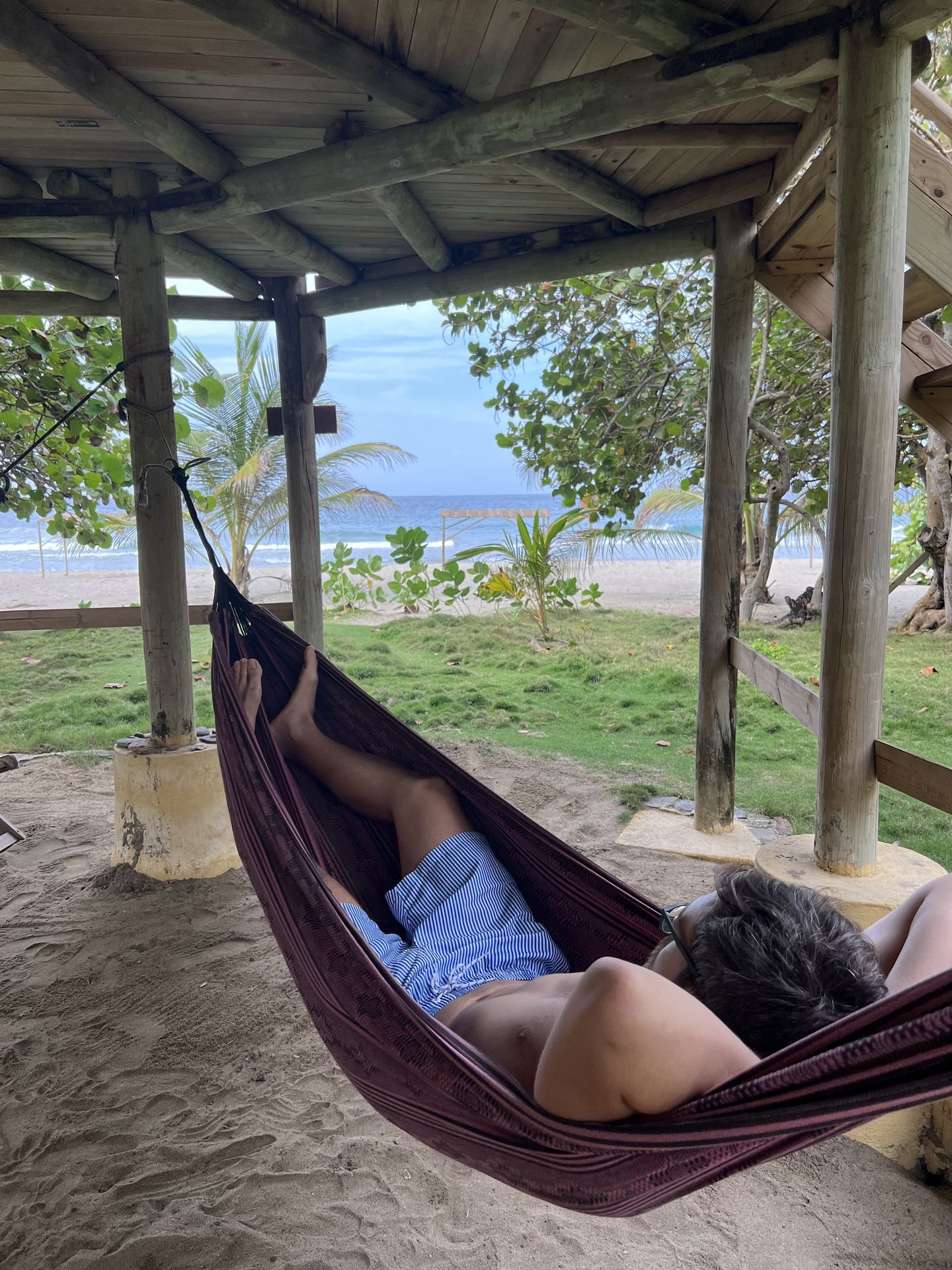
Playa Brava is simply magical: horses roaming freely, hardly any people around, powerful ocean waves, and an incredible sense of peace. We chose to stay in a tent (super comfy, even with a real bed inside), but there are other options. If you want more comfort, you can get a bungalow, or you can even save more money by sleeping in a hammock. We recommend starting the trek to arrive here early in the morning, to avoid the heat and enjoy the afternoon and evening in this amazing spot.
Consider that prices inside Tayrona are crazy. A 1L water bottle that costs 850 COP (0.2 EUR) in town goes for around 10,000 COP (2.75 EUR) inside the park. It is smart to bring your own food during the trek if you want to save some money and you don’t mind carrying some extra kilos while doing the trek. Also make sure to bring cash, as cards are not accepted anywhere.
The next day we continued the hike towards Cabo San Juan, another challenging trek due to the heat, around 2.5 hours. The beach there is stunning, but make sure to arrive early, since after 11 AM boats full of tourists start showing up, and it quickly becomes overcrowded. From there, it’s about a 2-hour easy, mostly flat hike to the El Zaino exit. There are some gorgeous panoramic viewpoints along the way.
Once you reach the end, you’ll need to pay 6,000 COP (1.65 EUR) for a van that takes you from the parking area of El Zaino to the main road (it’s over 4 km, trust us, you won’t have the will to make it by foot!). From there, you can catch the public bus, super cheap, and that runs every 15 minutes from 5 AM to 6 PM. It cost us 5,000 COP (1.40 EUR) to get from El Zaino back to El Calabazo. Don’t get scammed by the motorbikes outside; they charge way more, and the bus is completely fine!
5. Kogui tribe and Sierra Nevada
To wrap up this amazing trip, we wanted to spend a couple of days with a local Indigenous tribe: partly to give back and do some charity, but also to experience the lifestyle of the Kogui people, which really fascinated us. We chose them because of their deep respect for Mother Nature and their curious way of living. They live in isolation, using only what the earth provides. We wanted to learn from their wisdom and know more about their habits, hopefully to bring a little bit of that mindset back to the Western world.
We could write pages and pages about this experience, which would include both beautiful moments and some sketchy ones, since the area can be quite hot (and we’re not talking about the weather). For that reason, we prefer not to share any public contacts here. However, if you’d like to have a similar experience, feel free to reach out to us privately!
Food
Colombian food isn’t necessarily the country’s biggest draw compared to, say, Peru or Mexico, but there’s still a lot to love, especially the incredible street food and the coffee region’s cafés. Here’s a quick summary based on our own experience and criteria.
- Las Delicias de Martha (Medellín): Really local and authentic vibe. We had a bandeja paisa (~7.50 EUR) and shared it in 2; it was huge! Highly recommended spot to have your lunch after a morning visit in Comuna 13.
- Tepuy sabores de Venezuela (Medellín): An incredible place to eat Venezuelan food, and probably one of the best options there are outside Venezuela itself. Every single thing we tried was great, and the atmosphere is awesome. As a recommendation, order the Tres Leches, by far one of the best versions we’ve tried.
- Opera | Pizzeria & Restaurant (Medellín): If you’re tired of local food, you can go to Opera for outstanding Italian cuisine. Italian restaurants outside Italy are typically either expensive or low-quality, but this place is a positive exception. The pasta portions are HUGE, and the taste was great too (approved by Carola herself).
- Restaurante La Gloria de Gloria (Medellín): A very famous restaurant that seems to be quite popular even among locals, but we think it may be overhyped. The bandeja paisa (with 1kg of chicharrón!) is for 2 people, and it comes with a small dish of morcilla with arepa, plus a beans and meat soup. The whole pack is ~22 EUR, which seems rather expensive since you can find bandejas paisas for much lower prices, but the quality of the chicharrón was really good anyway. We managed to sit down immediately, but we were lucky; the queue afterwards was very long. A must-try if you really want to cross it off your checklist, but probably skippable if you can fight the FOMO and trust our criteria.
- Mercado de Laureles Gastrobar (Medellín): Really cool place to grab some food for fair prices. You can probably get a full meal for around 8 EUR, which is not bad at all. It’s super comfortable if you are not decided on what you want to eat since there are several options to choose from, and all of them seem really good.
- Restaurante El Remanso (Guatapé): Most places in the area are tourist traps and have outrageous prices, so this was a good discovery. Great staff, tasty food, and generous portions. You can tell the place has fair prices because there were several groups of locals having lunch there too. The trout was just 8 EUR, and we had a lemonade that they didn’t charge us (the waiter was a legend, such a cool guy). Also, the coffee was on the house.
- EL RINCON DE LUCI (Salento): It’s incredible that there still is just an authentically local place in such a touristy area. You get a whole meal for just ~4.5 EUR. Super tasty food, and the place is packed with locals so you know it’s definitely a valid choice.
- Son delicias (Salento): One of the few cafés that is more focused on local consumers than tourists, so don’t expect anything fancy. The coffee is from a machine but tastes decently good and is very cheap (1.5 EUR). Food like scrambled eggs and arepas are available, and they were also good. It’s a really comfortable spot because they open super early in the morning so you can grab breakfast here before heading down to Cocora if you’re an early bird.
- Concreto Café - Tienda de café (Salento): Our favorite coffee spot in Salento. It is very cozy and the atmosphere is perfect to chill. The food is great, and the coffee is in another league. We even tried the chocolate with cheese, which we were a bit suspicious about beforehand, but we actually ended up liking it too. The prices are quite fair too, considering the location, the quality of the coffee, and the style of the bar.
- MOCAFE (Filandia): Next-level coffee, and even at fair prices (~2 EUR for a delicious mocha). Totally recommended.
- Las Delicias (Pereira): If you’re looking for some grab-and-go street snacks, this is the place. They have all the Colombian snacks you can think of, and they were really good. Also, the prices were super fair, and the place seemed to be very popular among locals.
- Restaurante Espíritu Santo (Cartagena): The definition of optimal restaurant. Amazing food, generous portions, fast service, and ridiculously low prices. Be sure to arrive early if you want to be seated without waiting (the place was already full and with a huge queue outside at 12:10 PM, 10 minutes after opening). It’s insane that they offer such low prices in a city as touristy as Cartagena and in the middle of the center (as a reference, the fried fish of the day + THREE side dishes was 9.50 EUR).
- Vívolo Café | Cafetería en Santa Marta (Santa Marta): A bit on the pricey side, but totally worth it. As a reference, a frappuccino with a nut muffin was 8 EUR. The quality is very good though, so it doesn’t seem that expensive either. Apart from the food and beverages, the place itself is really nice to be in. Good AC, good WiFi, cozy atmosphere. We highly recommend stopping here for a great, tasty breakfast!
Additionally, there are a few things you should try that you’ll find pretty much anywhere on the street; no specific recommendation needed:
- Mango: super refreshing as a snack, sold everywhere, and they’ll mostly be incredibly good.
- Arepas quesudas: cheesy version of the classic Colombian arepa, dangerously addictive.
- Cholado: a fruity, syrupy shaved-ice dessert, perfect for the heat.
- Chontaduro: a fruit locals eat with sauces and salt; an acquired taste but worth trying once (we actually loved it even the first time!).